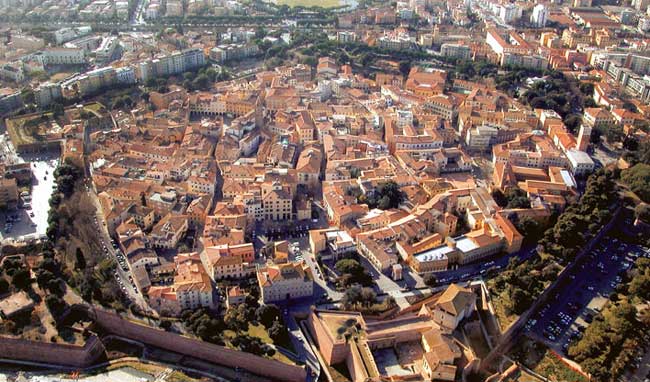
Set between rolling countryside and the Tyrrhenian coast, Grosseto is the provincial capital and heart of Maremma Tuscany, and one of the region’s most rewarding small cities to explore. Less crowded than Florence or Siena, Grosseto offers medieval streets, Renaissance fortifications, local markets, archaeological sites, and easy access to nature reserves and seaside villages.
For travellers looking for an authentic Tuscan experience, Grosseto is an excellent base for discovering southern Tuscany.
Why Visit Grosseto?
Grosseto stands out for its remarkably preserved historic walls, relaxed atmosphere, and connection to the traditions of Maremma. The city combines history, culture, local cuisine, and outdoor experiences within a compact and walkable center.
It is also strategically located:
- around 15 minutes from the ancient ruins of Roselle
- close to the beaches of the Argentario coast
- near the protected landscapes of the Maremma Regional Park
- well connected by train to Rome and Pisa
In recent years, Grosseto has become increasingly appreciated by travellers seeking sustainable tourism, cycling routes, wine experiences, and slower-paced holidays in Tuscany.

The Medicean Walls: Grosseto’s Symbol
One of the city’s defining landmarks is the impressive ring of Medicean Walls surrounding the historic center. Grosseto is among the few Italian cities whose defensive walls remain almost entirely intact.
Construction began in 1574 under the orders of Francesco I de’ Medici, Grand Duke of Tuscany, replacing older medieval fortifications. The project was designed by military architect Baldassarre Lanci and completed during the reign of Ferdinando I de’ Medici.
Today, the walls form a large green park shaded by trees, ideal for walking, jogging, or relaxing before exploring the old town.
What to See in Grosseto Historic Center
Cathedral of San Lorenzo
The city’s main religious monument is the Cathedral of San Lorenzo, overlooking Piazza Dante.
Construction began at the end of the 13th century under architect Sozzo Rustichini of Siena and continued for several centuries. The cathedral features a Romanesque-Gothic style with alternating white and black marble bands inspired by Sienese architecture.
Inside, visitors can admire:
- a finely carved 15th-century baptismal font
- the Madonna delle Grazie by Matteo di Giovanni
- stunning stained-glass windows and refined medieval details.
Piazza Dante and Palazzo Aldobrandeschi
The heart of Grosseto is Piazza Dante, home to cafés, historic buildings, and the neo-Gothic Palazzo Aldobrandeschi.
Built between 1900 and 1903 by architect Lorenzo Porciatti, the palace now houses the Province of Grosseto. Its towers and decorative details recall Siena’s medieval palaces.
Nearby stands the Palazzo Comunale, the town hall, characterized by Neo-Renaissance architecture.
Churches and Historic Buildings
Among the city’s notable churches:
- Church of San Francesco
- Church of San Pietro, the city’s oldest known religious building
- Church of Misericordia
Walking through the center, you will also notice Liberty-style palaces and rationalist architecture dating from the early 20th century.

Museums and Culture in Grosseto
Travellers interested in archaeology and local history should visit the Maremma Archaeology and Art Museum. It preserves Etruscan, Roman, and medieval artifacts from the region, and also houses the Museum of Sacred Art of the Diocese of Grosseto, worth visiting for its collection of religious paintings and objects.
For evening entertainment, check the program at Teatro degli Industri, an elegant historic theatre originally opened in the early 19th century.
Shopping and Local Life
The main shopping street is Corso Carducci, the historic main artery of the city center. Here you will find boutiques, wine shops, cafés, bookstores, and artisan food stores.
Weekly markets remain an important part of local life and are a great opportunity to discover Maremma cheeses, olive oil, wines, cured meats, and seasonal produce.
Roselle Archaeological Area
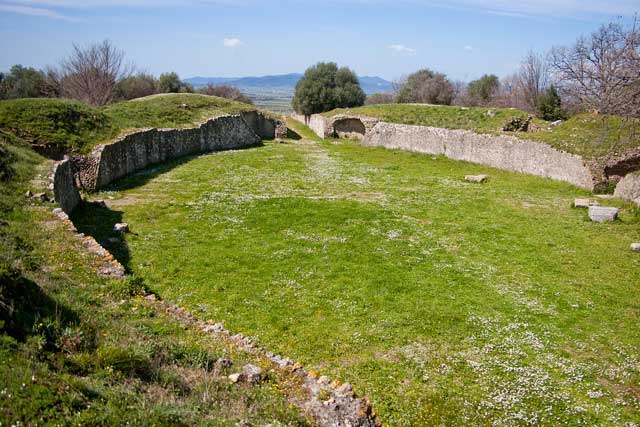
Just outside the city lies one of Tuscany’s most fascinating archaeological sites: Roselle Archaeological Area.
Ancient Rusellae was an important Etruscan settlement before becoming a Roman town. Visitors can explore:
- massive Etruscan cyclopean walls
- a Roman amphitheatre
- thermal baths
- mosaics and ancient roads
The site is immersed in the countryside and offers beautiful panoramic views over the Maremma landscape.
Nature, Beaches, and Outdoor Experiences
Grosseto is an excellent destination for outdoor lovers.
Nearby, Maremma Regional Park protects one of Tuscany’s most unspoiled coastal environments, with pine forests, wild beaches, hiking trails, birdwatching areas, and cycling routes.
The region is also famous for the Butteri, the traditional cowboys of Maremma, who still work on local farms and ranches today.
For travellers interested in the coast, Porto Ercole, Porto Santo Stefano, Talamone, and Castiglione della Pescaia are all within easy reach.
FAQ About Visiting Grosseto
Is Grosseto worth visiting?
Yes. Grosseto is one of Tuscany’s lesser-known cities and offers a more authentic and relaxed atmosphere than many major tourist destinations. Its historic walls, archaeological heritage, and proximity to the coast make it an excellent stop in southern Tuscany.
What is Grosseto famous for?
Grosseto is known for its perfectly preserved Medicean Walls, its historic center, nearby Etruscan ruins, and its location in the heart of Maremma Tuscany.
When is the best time to visit Grosseto?
Spring and early autumn are ideal, with pleasant temperatures for sightseeing, hiking, cycling, and beach trips. Summer is popular for combining the city with the Tuscan coast.
How far is Grosseto from the sea?
The closest beach is Marina di Grosseto, around 15–20 minutes away by car. The glamorous coastal area and pristine beaches of Monte Argentario are about 40 minutes south.
Where to stay near Grosseto and the sea?
Travellers looking to combine nature, relaxation, fine dining, wellness, and outdoor activities can stay at Argentario Golf & Wellness Resort, surrounded by Mediterranean landscapes and located within easy reach of Grosseto, Porto Santo Stefano, the beaches of Monte Argentario, and the Maremma countryside.


That’s where we went last summer a truly fascinating area!
Hi Francis, thanks for stopping by on our blog! Hoping you get the chance to visit more areas around Maremma 🙂